





Overhead Crane Inspection Checklist: Prevent Costly Industrial Failures
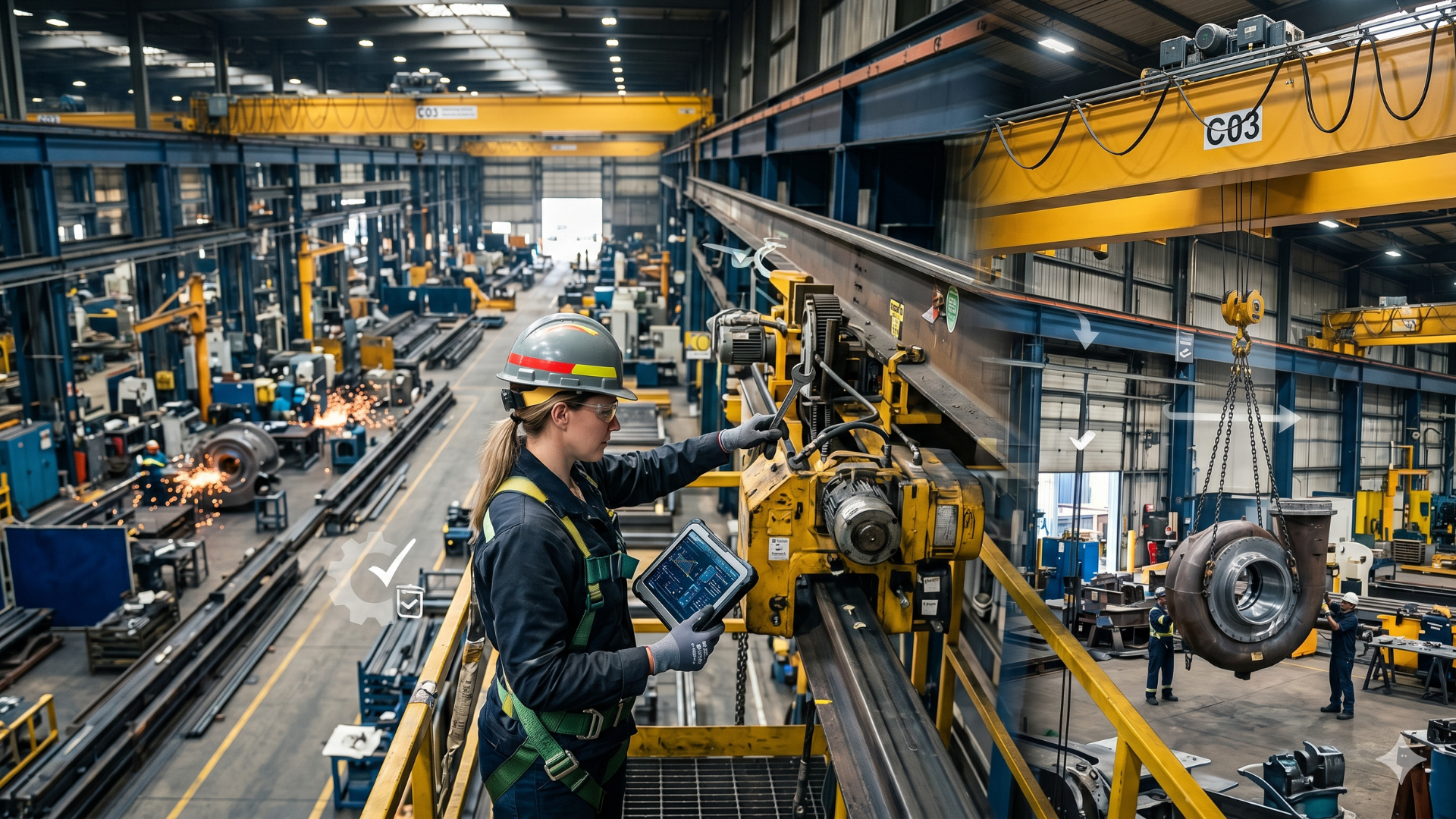
Why Crane Inspection Is Essential for Industrial Operations
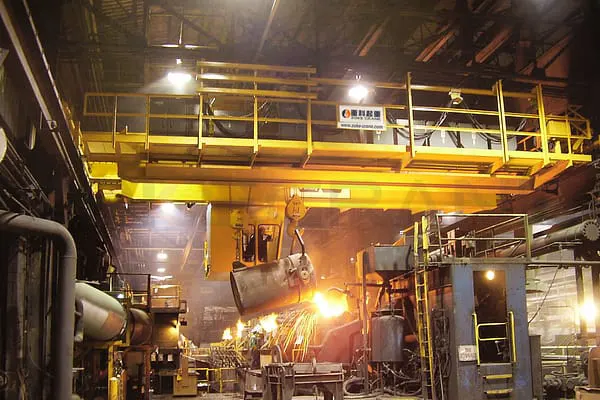
Overhead cranes are among the most heavily used systems in industrial environments. They handle continuous lifting operations, heavy loads, and demanding operational cycles.
Without proper inspection, crane systems become vulnerable to:
- Sudden breakdowns
- Mechanical failure
- Safety incidents
- Production downtime
- Expensive repairs
A structured overhead crane inspection checklist helps industries identify issues early and maintain safe, uninterrupted operations.
What Is an Overhead Crane Inspection?
Overhead crane inspection is the process of evaluating crane components, performance, and safety systems to ensure operational reliability.
The purpose of inspection is to:
- Detect wear and damage
- Prevent accidents
- Maintain compliance
- Improve equipment lifespan
Regular inspections are essential for every industrial crane system.
Types of Overhead Crane Inspections
Crane inspections are generally divided into different categories based on frequency and operational requirements.
Daily Inspection
Performed before crane operation begins.
Focus areas include:
- Visible damage
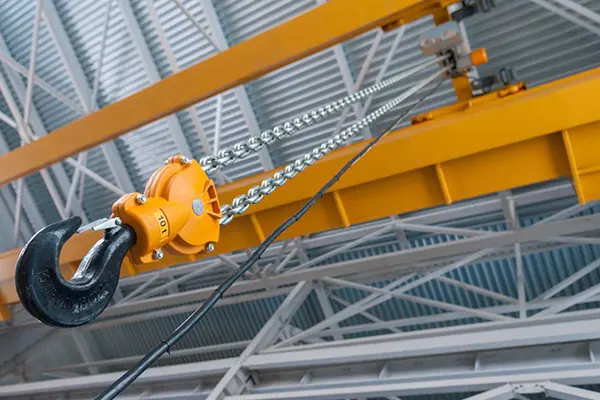
- Hook condition
- Wire rope condition
- Brake functionality
Daily checks help operators identify immediate safety concerns.
Frequent Inspection
Conducted weekly or monthly depending on crane usage.
Includes:
- Electrical system checks
- Lubrication verification
- Alignment inspection
- Operational testing
Frequent inspections reduce the risk of unexpected failures.
Periodic Inspection
A detailed technical evaluation conducted quarterly or annually.
Includes:
- Structural analysis
- Load testing
- Component wear inspection
- Comprehensive maintenance evaluation
Periodic inspections ensure long-term crane reliability.
Complete Overhead Crane Inspection Checklist
A detailed checklist ensures that all major crane systems are evaluated consistently.
1. Wire Rope Inspection
Wire ropes are critical for safe lifting operations.
Inspect for:
- Broken strands
- Corrosion
- Kinks or twisting
- Diameter reduction
- Improper winding
Damaged wire ropes increase the risk of load failure.
2. Hook Inspection
Hooks must be checked for:
- Cracks
- Deformation
- Excessive wear
- Improper latch operation
Hook failure creates severe safety hazards.
3. Brake System Inspection
Brake systems control load stability and movement.
Inspect for:
- Brake pad wear
- Slippage
- Delayed response
- Heat damage
Brake failure can lead to uncontrolled crane movement.
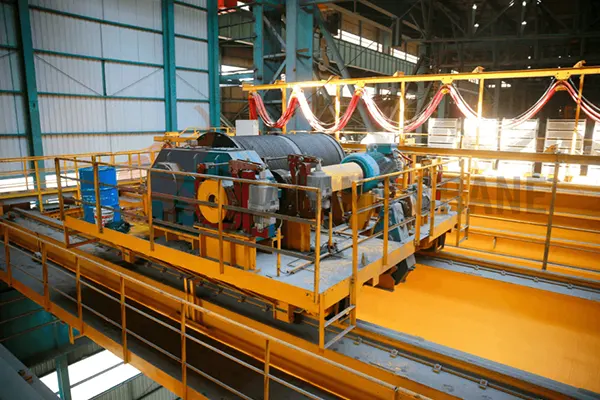
4. Hoist Inspection
The hoist mechanism should be evaluated for:
- Drum alignment
- Abnormal noise
- Gear wear
- Smooth lifting operation
Hoist issues directly impact crane efficiency.
5. Motor Inspection
Inspect crane motors for:
- Overheating
- Vibration
- Noise
- Electrical imbalance
Motor failure can stop operations immediately.
6. Electrical System Inspection
Electrical inspection includes:
- Wiring condition
- Control panel functionality
- Limit switch testing
- Emergency stop verification
Electrical faults are one of the leading causes of crane breakdowns.
7. Gearbox Inspection
Gearboxes should be checked for:
- Oil leakage
- Abnormal sound
- Gear wear
- Overheating
A damaged gearbox affects crane movement and lifting capacity.
8. Structural Inspection
Structural evaluation includes:
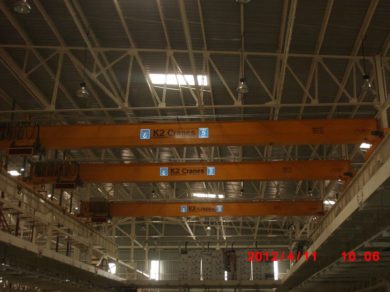
- Girder inspection
- Weld integrity
- Rail alignment
- Corrosion analysis
Structural damage can compromise crane stability.
9. Safety Device Inspection
Inspect all crane safety systems, including:
- Limit switches
- Warning alarms
- Emergency stop systems
- Overload protection devices
Safety devices must function correctly at all times.
10. Lubrication Inspection
Improper lubrication increases wear and friction.
Check:
- Bearings
- Gears
- Wire ropes
- Moving joints
Adequate lubrication improves equipment lifespan.
Common Problems Identified During Crane Inspection
Regular inspections help detect issues before they become major failures.
Excessive Component Wear
Wear develops due to:
- Continuous operation
- Heavy load handling
- Poor lubrication
Early detection prevents expensive repairs.
Electrical Faults
Common issues include:
- Loose connections
- Overheated motors
- Damaged wiring
Electrical faults often cause sudden shutdowns.
Misalignment Problems
Misalignment affects:
- Rail movement
- Load balance
- Crane stability
Correct alignment improves performance and reduces mechanical stress.
Corrosion and Structural Damage
Industrial environments can accelerate corrosion.
Inspection helps identify:
- Surface rust
- Structural weakening
- Weld damage
Ignoring corrosion increases operational risk.
Why Preventive Inspection Saves Costs
Many businesses only address crane problems after a breakdown occurs.
This reactive approach results in:
- High repair expenses
- Extended downtime
- Production losses
Preventive inspection reduces:
- Emergency repairs
- Unexpected failures
- Long-term maintenance costs
Inspection is one of the most cost-effective maintenance strategies.
Industries That Require Regular Crane Inspection
Overhead crane inspections are essential in industries with continuous lifting operations.
Key Industries:
- Manufacturing
- Steel plants
- Warehousing and logistics
- Heavy engineering
- Automotive industries
These industries depend on reliable crane performance for productivity and safety.
Importance of Compliance and Safety Standards
Crane inspections also help businesses comply with industrial safety standards.
Compliance improves:
- Workplace safety
- Operational reliability
- Legal protection
Regular documentation and inspection records are critical for industrial operations.
Benefits of Professional Crane Inspection Services
Professional inspection services provide multiple operational advantages.
Operational Benefits
- Reduced downtime
- Better crane performance
- Improved reliability
Financial Benefits
- Lower repair costs
- Extended equipment lifespan
- Reduced operational losses
Safety Benefits
- Reduced accident risk
- Safer workplace environment
- Improved compliance
Why AMC and Inspection Work Together
Inspection alone is not enough without proper maintenance execution.
Combining:
- Regular inspections
- Preventive maintenance
- AMC support
creates a complete crane reliability strategy.
This approach minimizes failures and improves long-term operational efficiency.
Conclusion
A structured overhead crane inspection checklist is essential for preventing costly failures, improving safety, and maintaining industrial productivity.
Regular inspections help businesses:
- Detect issues early
- Reduce downtime
- Improve crane lifespan
- Maintain compliance standards
Inspection and preventive maintenance together create a reliable and efficient crane operation.
🚀 CALL TO ACTION
Prevent unexpected crane failures before they impact your operations.
Get professional overhead crane inspection services with:
- Complete technical evaluation
- Preventive maintenance support
- Safety compliance checks
- AMC-based inspection programs
Contact now to improve crane reliability and operational safety.
🔗 INTERNAL LINKING
- Industrial crane AMC services blog
- EOT crane maintenance blog
- Crane repair services Chennai blog
- Contact page