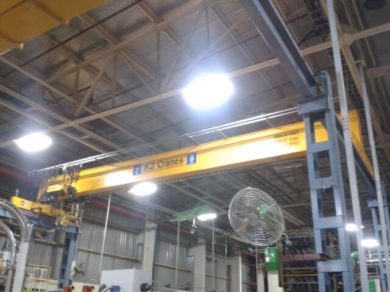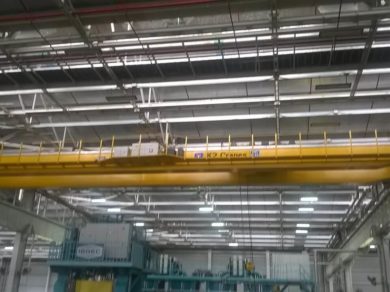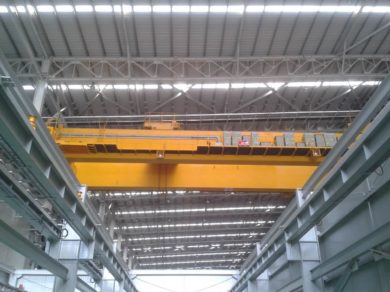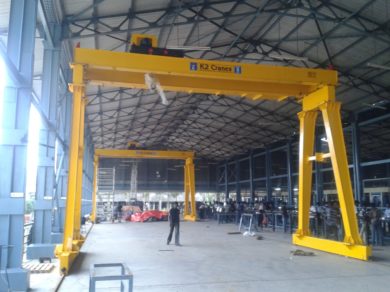






The Silent Revolution in Indian Manufacturing: How Smart Lifting Ecosystems Are Transforming the Future
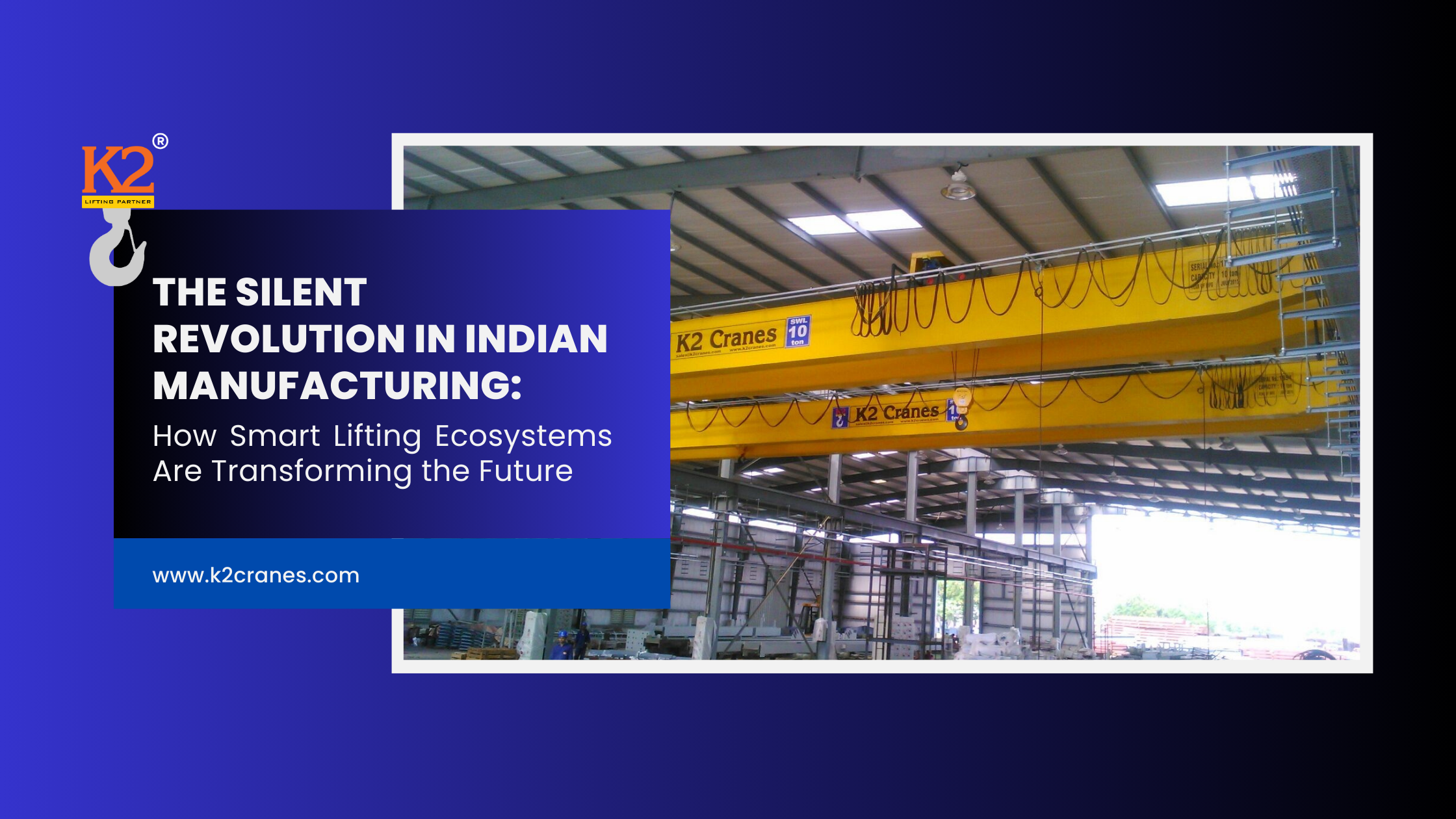
A new era is unfolding in India’s manufacturing landscape-one where efficiency is not just about bigger machines, but also smarter ecosystems. As factories scale, warehouses expand, and production expectations rise, industries have been silently rewriting their processes around a single, compelling idea:
“A crane is no longer just equipment; it’s the central nervous system of a modern workspace.”
This is a much more profound transition than one might initially imagine. And at K2 Cranes, we’ve spent years understanding how lifting solutions can evolve from stand-alone machines to intelligent, interconnected systems that boost productivity, safety, and operational clarity.
From Lifting Loads to Managing Workflows
Traditional cranes were constructed to move materials.
The modern crane has to do so much more.
Today, industries expect:
- Optimized workflow movement
- Real-time monitoring
- Smooth load handling
- Minimal downtime
- Seamless integration with the automation lines
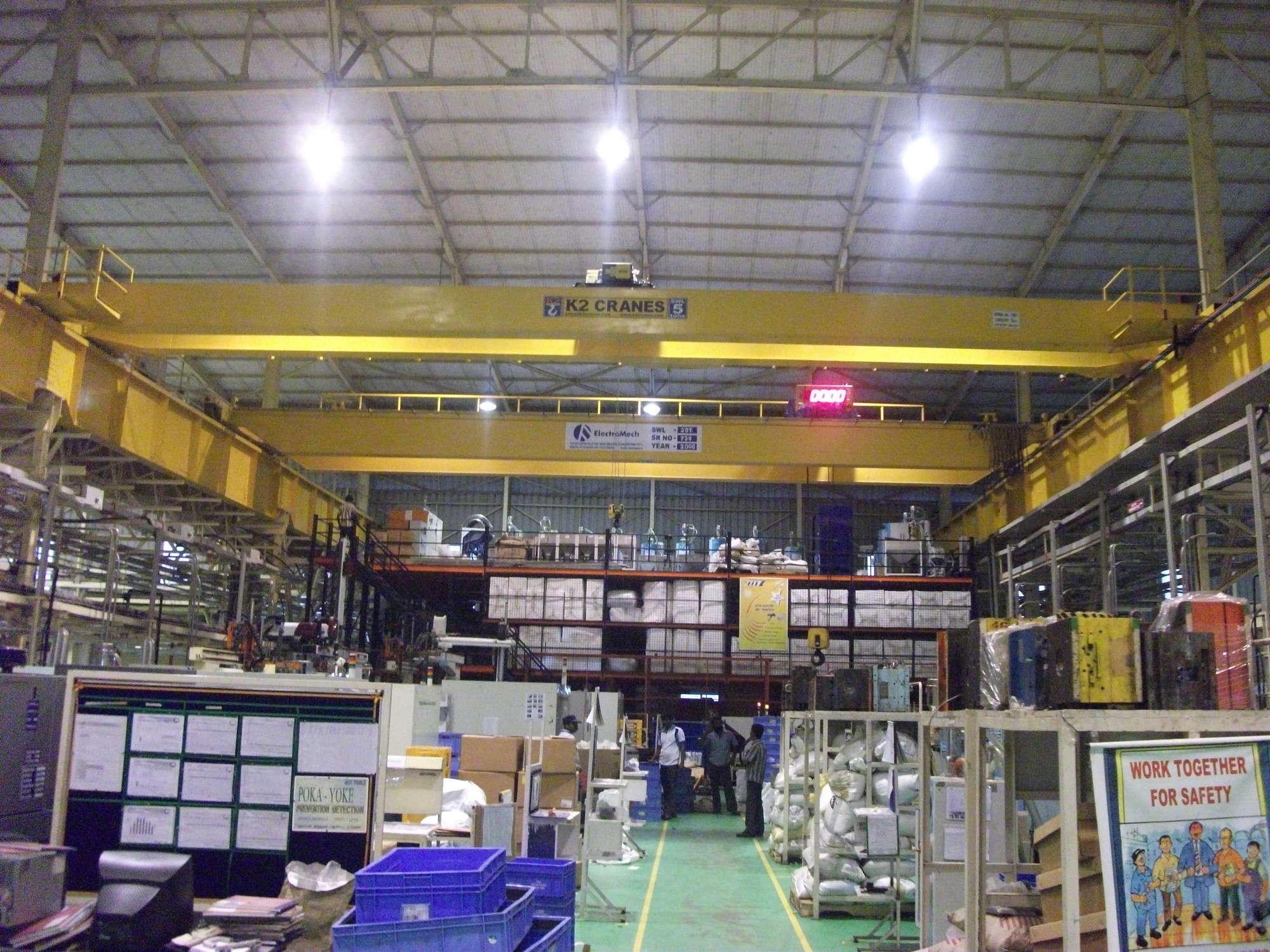
K2 Cranes design solutions that don’t just lift-guides, supports, and enhances factory flow. It’s no more about “How heavy can it lift?” but rather “How intelligently can it work?”
Smarter Factories Need Smarter Cranes
The design of cranes is changing with industries adopting IoT, AI layouts, and automated production lines.
Modern needs include:
- Immediate access to spares
- Predictive maintenance
- Ergonomic handling systems
- Energy efficiency
- High-precision lifting
- Zero-delay service support
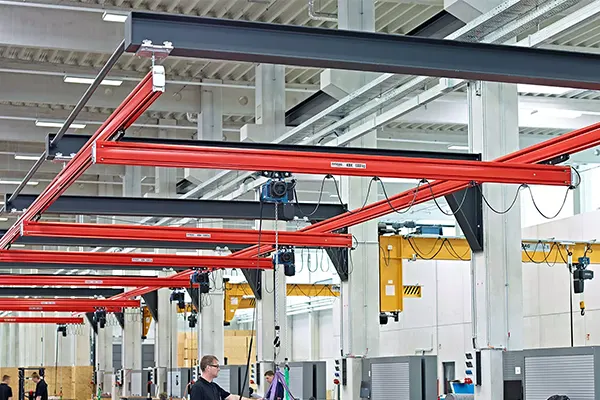
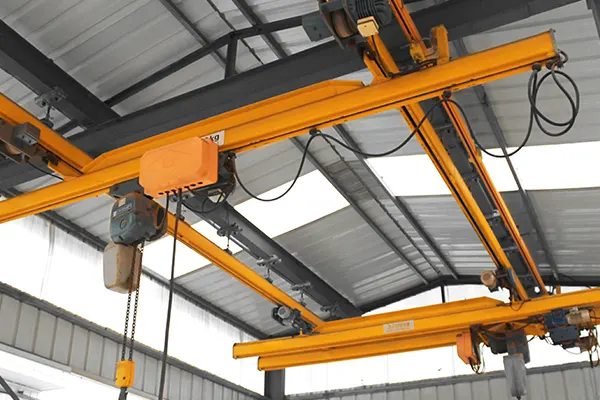
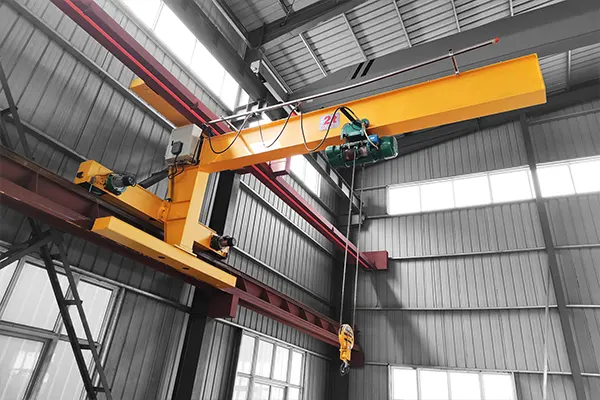
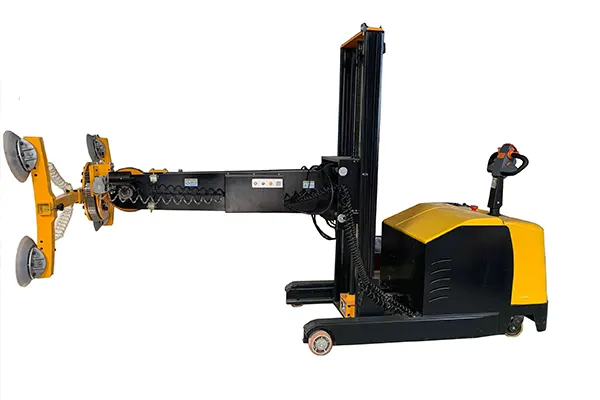
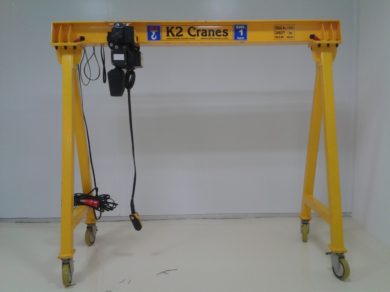
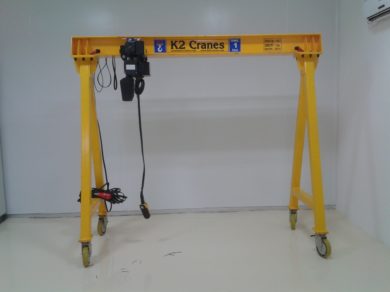
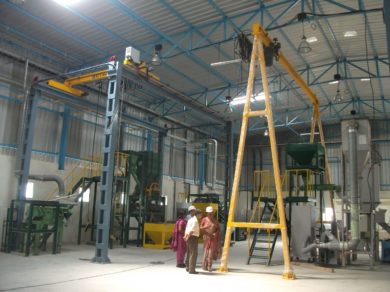
From the new Light Crane System, to compact Electric Pallet Trucks and Forklifts, K2’s new-age solutions create the smart factory ecosystem envisioned by industries.
Because a smart factory doesn’t start on the assembly line.
It starts with the right lifting foundation.
The Rise of “Connected” Maintenance
Breakdowns don’t just stop production — they break momentum.
The future belongs to companies that remove uncertainty.
With CraneCare, K2 is pushing a new paradigm:
Connected maintenance
A system where:
- Spare parts are available instantly through India’s first crane spares eStore.
- Operators are trained to reduce misuse
- Service teams respond more quickly
- Preventive actions replace post-breakdown repairs
This is the backbone of the maintenance culture where machines last longer, perform better, and keep industries running without interruptions.
The Human Factor: Operators Matter More Than Ever
With cranes growing smarter, so too must the people be handling them.
That’s why operator & safety training is emerging as a critical industry need.
Skilled, informed operators:
- Reduce equipment stress
- Prevent accidents
- Operate at optimum efficiency
- Greatly extends crane life
At K2, we believe a well-trained operator is the best upgrade any industry can invest in.
The Future: Integrated Lifting Ecosystems
The next decade will see a major shift: cranes, handling equipment, and digital systems working as one integrated ecosystem.
Here’s what the future looks like:
- Automatic warehouse movement with cranes
- Sensors supplying real-time health data
- Operators supported by assistive technologies
- Instant procurement through online spare hubs
- Unified support and service platforms
- Smarter space utilization through modular crane systems
And this future is not far away.
K2 Cranes is already engineering the modules that will power India’s next-generation factories.
Conclusion: India Is Rising — and So Must Its Lifting Solutions
The industries of tomorrow will demand more speed, more safety, more intelligence, and more reliability. Cranes that only “lift” will no longer be sufficient. What we need are lifting systems that think, support, and elevate operations.
At K2 Cranes, we’re committed to building this future-one intelligent solution at a time.
Because when the nation moves forward, we make sure its industries rise with confidence.