





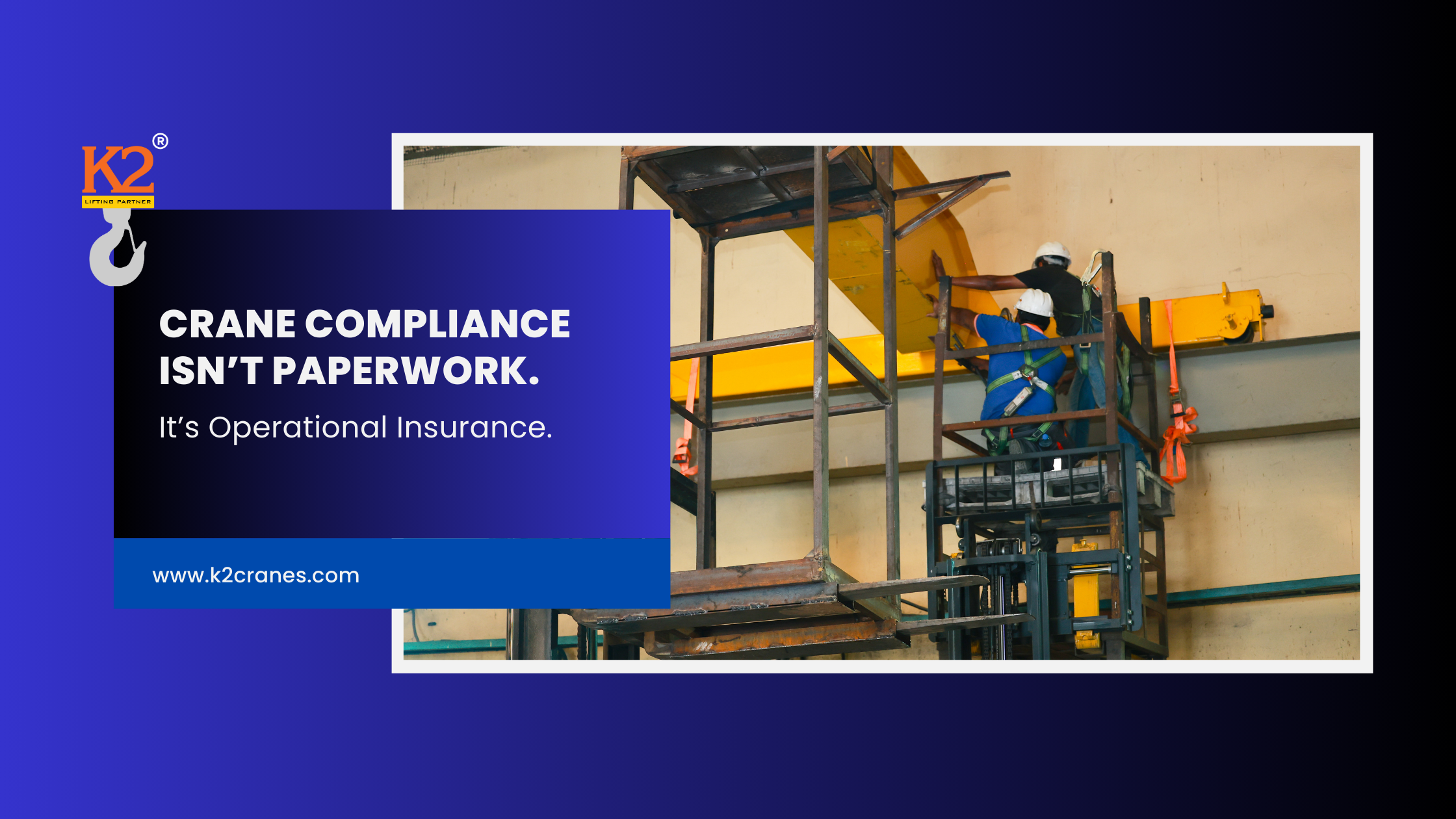
Crane Compliance Isn’t Paperwork. It’s Operational Insurance.
Introduction
In many factories, crane compliance is treated like a filing task. Get the certificate, store it somewhere, and forget it exists.
That mindset works perfectly right up until an audit, an accident, or a shutdown notice lands on the table.
Crane compliance is not bureaucracy. It is risk control in written form.
What Crane Compliance Actually Covers
Compliance is not just one certificate or annual formality. It involves multiple layers working together:
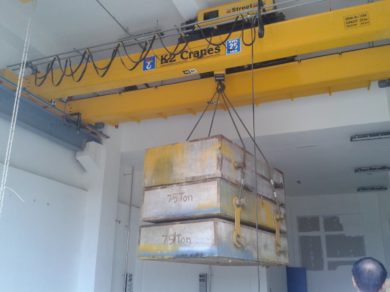
- Load testing and certification
- Periodic inspections of mechanical and electrical components
- Brake and limit switch verification
- Structural checks for fatigue and deformation
- Documentation aligned with statutory and safety norms
Each layer exists because something, somewhere, failed badly enough for rules to be written.
The Cost of “We’ll Do It Later”
Non-compliance rarely causes immediate failure. That’s why it’s dangerous.
The real consequences show up as:
- Sudden work stoppages during audits
- Insurance claim rejections after incidents
- Legal exposure for plant management
- Forced shutdowns until rectification
At that stage, the cost is no longer preventive. It is reactive and expensive.
Compliance Improves Performance, Not Just Safety
A properly inspected and certified crane is not just safer. It performs better.
Regular compliance checks help identify:
- Brake wear before failure
- Electrical issues before breakdown
- Structural fatigue before deformation
- Load handling inefficiencies
This reduces unplanned downtime and keeps operations predictable.
Documentation Is Part of the Machine
A crane without updated records is incomplete, even if it runs perfectly.
Accurate documentation:
- Builds confidence during audits
- Simplifies maintenance planning
- Helps track component life
- Protects management decisions
In modern industrial environments, documentation is as critical as engineering.
Compliance as a Support System
At K2 Cranes & Components Pvt. Ltd., compliance is approached as an ongoing support process rather than a one-time activity. The focus is on helping industries stay audit-ready, safe, and operationally stable throughout the crane’s life.
Because compliance done right rarely makes noise. It quietly prevents problems.
Conclusion
Cranes fail mechanically, but businesses fail procedurally.
Treating crane compliance as operational insurance protects productivity, people, and reputation. It is not about satisfying inspectors. It is about ensuring that lifting operations never become the weakest link in an industrial system.
Paperwork ignored today becomes a problem tomorrow.
Paperwork respected quietly keeps everything moving.