





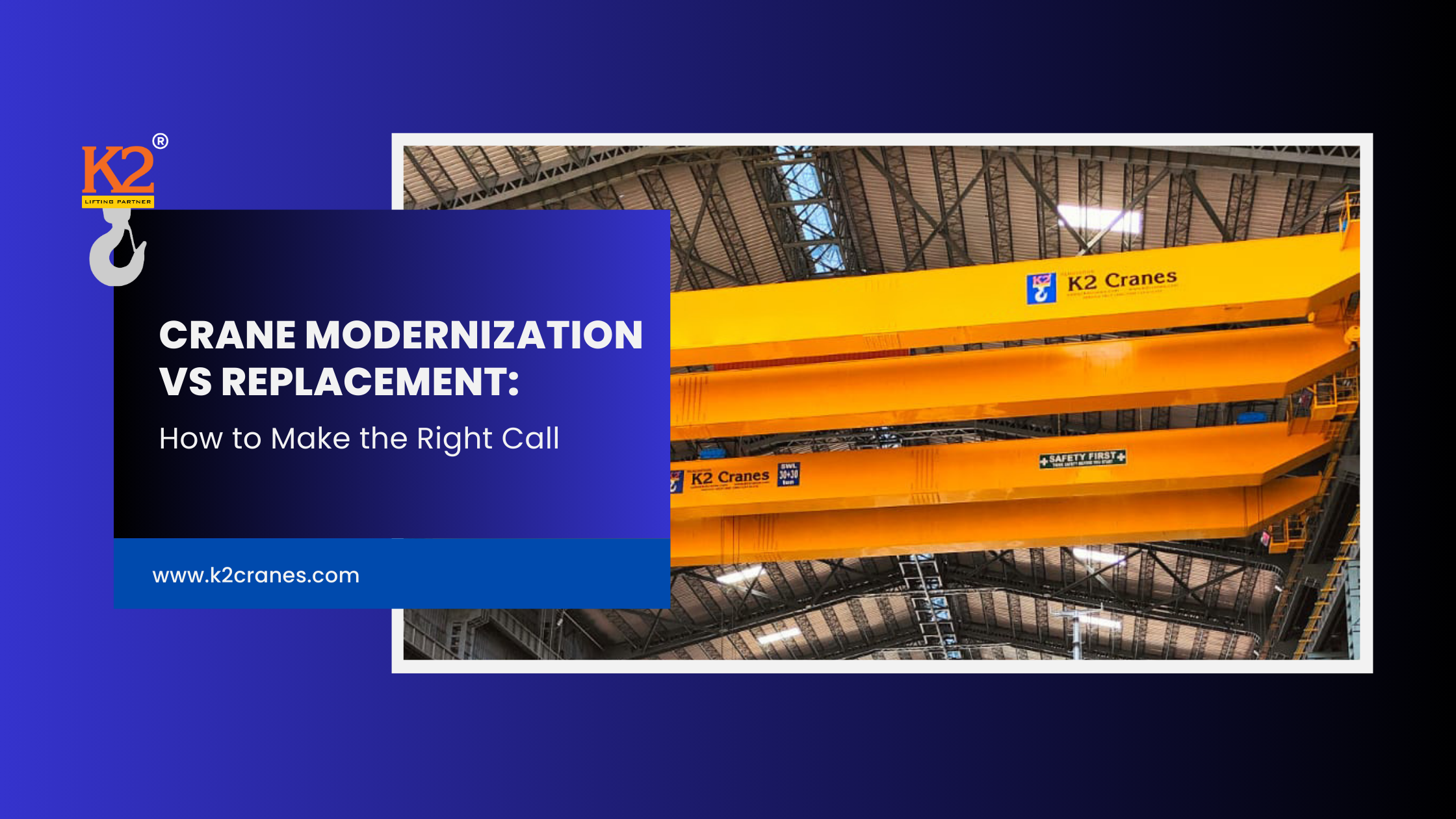
Crane Modernization vs Replacement: How to Make the Right Call
Introduction
When a crane starts showing its age, the default reaction is often extreme. Either keep repairing it endlessly or scrap it entirely.
Both decisions can be expensive. One wastes money slowly. The other one wastes money fast.
The smarter approach is knowing when modernization is enough and when replacement is unavoidable.
What Crane Modernization Actually Means
Modernization is not cosmetic repair. It involves targeted upgrades that improve safety, reliability, and performance while retaining the existing structure.
Typical modernization scopes include:
-
Electrical and control panel upgrades
-
Hoist, motor, or brake replacement
-
Safety system enhancements
-
Load monitoring integration
-
Compliance-driven modifications
When done correctly, modernization can extend crane life significantly.
When Modernization Makes Sense
Modernization is usually the right choice when:
-
The crane structure is mechanically sound
-
Load requirements have not increased drastically
-
Repeated failures are limited to specific components
-
Compliance gaps are upgradeable
In these cases, replacing critical systems delivers strong performance without full replacement costs.
When Replacement Is the Better Decision
Replacement becomes necessary when:
-
Structural fatigue or deformation is detected
-
Load capacity or duty class needs have increased
-
Obsolete components are no longer supportable
-
Frequent failures affect core productivity
-
Layout or process changes demand a new configuration
At this stage, modernization only postpones the inevitable.
Cost Comparison Isn’t Just Numbers
Upfront cost comparisons can be misleading.
Modernization often offers:
-
Lower capital expenditure
-
Shorter downtime
-
Faster compliance restoration
Replacement offers:
-
Longer design life
-
Higher efficiency for new processes
-
Better scalability for future expansion
The correct choice depends on operational priorities, not just budget limits.
Downtime and Risk Matter More Than Age
Age alone does not define a crane’s viability. Some older cranes outperform newer ones because they were correctly designed, maintained, and operated.
What matters more:
-
Failure frequency
-
Safety risk exposure
-
Maintenance predictability
-
Spare parts availability
Decisions should be based on condition, not calendar years.
A Structured Evaluation Approach
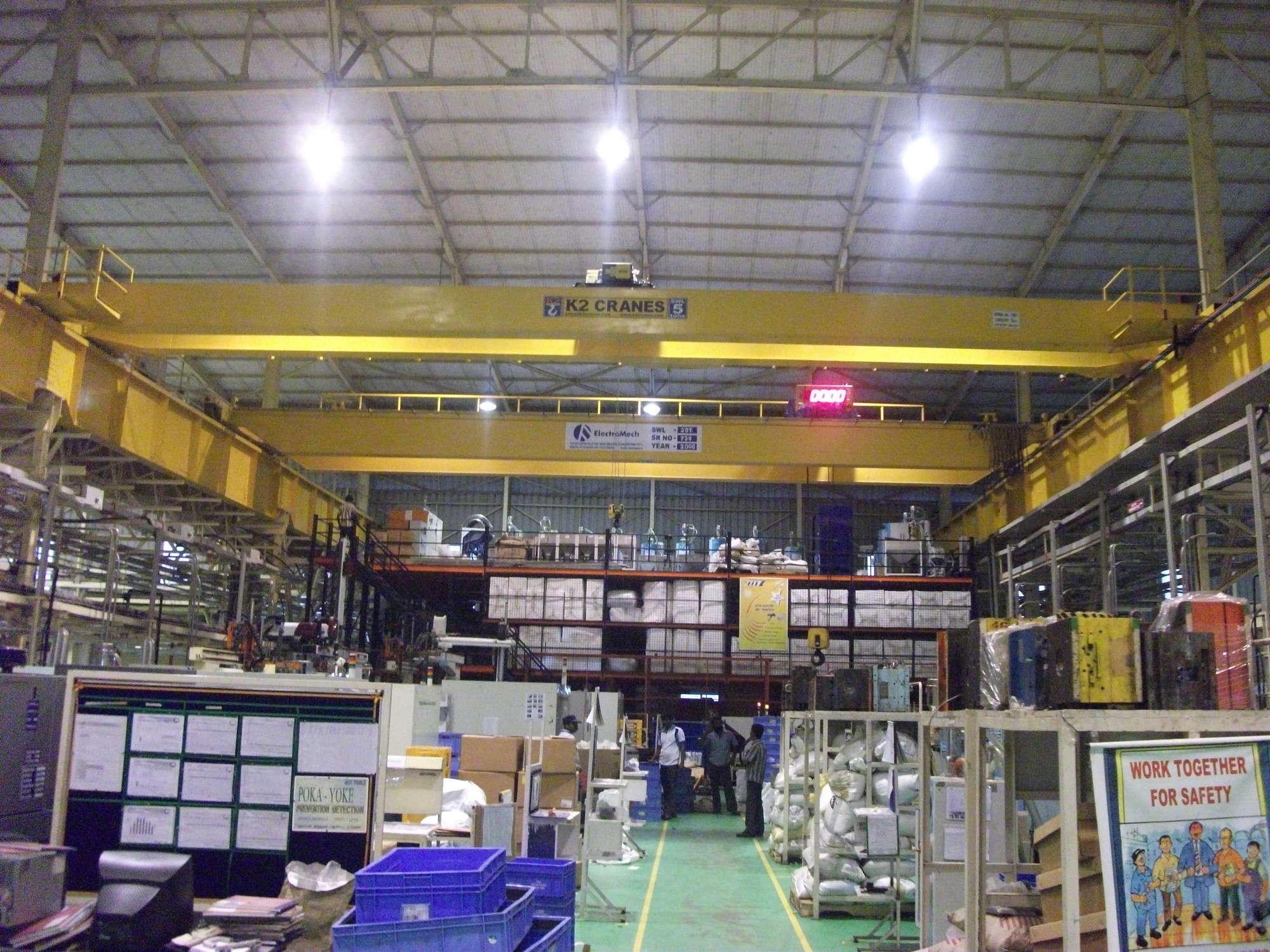
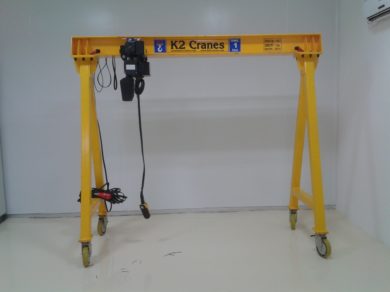
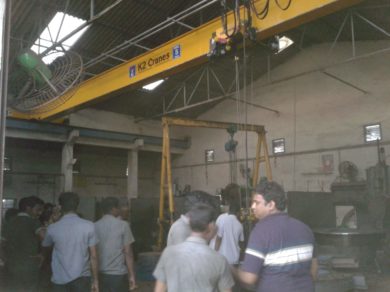
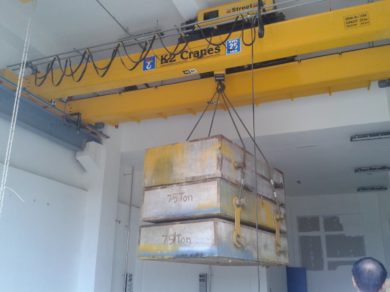
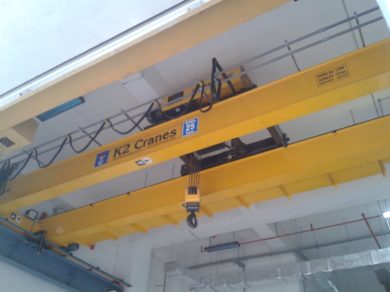
At K2 Cranes & Components Pvt. Ltd., crane assessments focus on engineering condition, compliance status, operational needs, and long-term cost impact before recommending modernization or replacement.
Because guessing is expensive.
Conclusion
Modernization and replacement are not opposing choices. They are tools for different situations.
Modernize when the foundation is strong and the gaps are specific.
Replace when the structure, capacity, or future demands have outgrown the system.
The worst decision is not choosing wrong.
It’s choosing without proper evaluation.